

The holidays bring families home to Montgomery. For many adult children, this visit is the first close look at a parent in months. Sometimes, that look reveals something worrying. If you are now weighing Alzheimer care in Montgomery AL, you are not alone.
Maybe the kitchen smells of burnt food. Perhaps unopened mail covers the table. These small details can point to bigger safety concerns.
This guide walks you through nine warning signs to watch for. It also covers next steps, including dementia care at home in Montgomery. You will see how companion care services in Montgomery AL can help. Most importantly, it helps you act with clarity, not guilt.
Please note: this article is for education only. It does not replace advice from your parent’s doctor.
Quick answer: Is your parent still safe living alone?
A parent with dementia may no longer be safe alone when several warning signs appear. Watch for wandering, unsafe cooking, medication errors, unpaid bills, and weight loss. Poor hygiene, falls, time confusion, and mood changes matter too. One sign deserves attention. Several together usually mean it is time for a medical evaluation and added support at home.
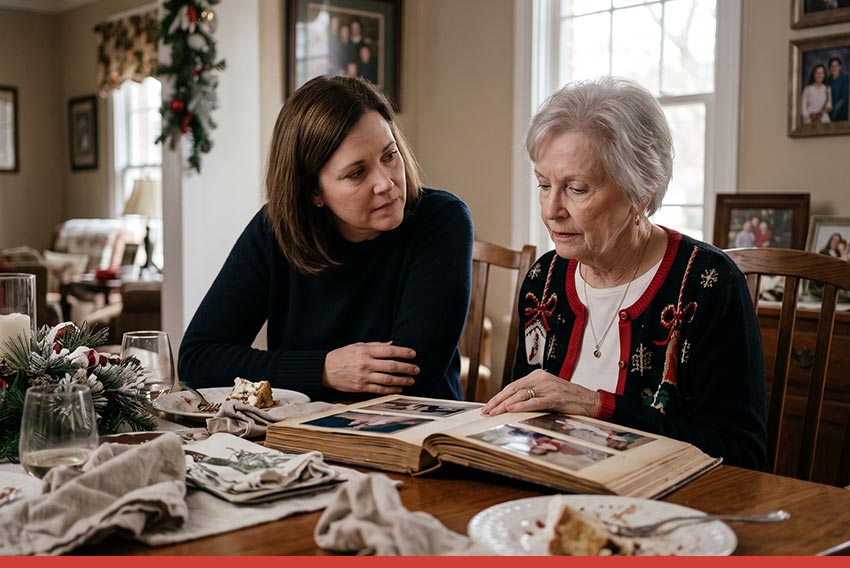
Holidays reveal hidden changes because you spend more continuous time with your parent. Phone calls are short. Many people with early dementia also cover memory gaps well in brief chats.
A three-day visit is different, however. You see daily routines, the refrigerator, the medicine cabinet, and the mailbox. Busy gatherings can also overwhelm someone with memory loss. As a result, confusion may surface more clearly than usual.
Consider a common scenario. A daughter flies in from Atlanta for Thanksgiving. Her father greets her warmly, yet he asks three times when she arrived.
Later, she finds his pill organizer untouched for a week. Moments like these are hard to witness. Still, they give your family valuable information.
Alzheimer’s is common in Alabama, so many families share your concerns. According to the Alzheimer’s Association:
Behind each number is a family trying to keep someone safe. In addition, many of those caregivers are also juggling jobs and children.
The Alzheimer’s Association reports that Black Americans are up to twice as likely to develop Alzheimer’s. Yet they are 35% less likely to be diagnosed.
For Montgomery families, this gap matters. Early diagnosis opens doors to treatment, planning, and support. Therefore, if something feels off, talk with a doctor sooner rather than later. Memory changes are not simply “old age.”
Any one of these signs deserves attention, and several together suggest your parent needs more support. Use your holiday visit to observe gently, without testing or confronting.
During your visit, your mom drives to a familiar church and returns hours late. Or she seems unsure how to get home from the grocery store.
Why it matters: wandering is one of the most serious dementia risks. A person may leave home at night or in bad weather.
Small step: ask neighbors whether they have noticed anything unusual. Also consider a GPS tracker or medical ID bracelet.
You might find scorched pans, a burner left on, or expired food on the holiday table.
Why it matters: forgotten stoves can cause kitchen fires and burns. Meanwhile, cooking mistakes often hint at trouble following steps in order.
Small step: install stove knob covers or an automatic shut-off device.
Pill bottles may be nearly full, nearly empty, or scattered around the house.
Why it matters: missed or doubled doses can lead to falls, confusion, or hospital visits. This risk grows with multiple prescriptions.
Small step: bring all medications to the pharmacist for a review. Then set up an automatic or locked pill dispenser.
Past-due notices may pile up. Alternatively, you might notice odd charges, new subscriptions, or frequent calls from strangers.
Why it matters: people with dementia are frequent targets for financial scams. Unpaid utilities can also lead to shutoffs.
Small step: with permission, review recent statements together. Ask the bank about alerts for unusual activity.
The fridge may hold expired items, or there may be little food at all. Clothes might also look looser than before.
Why it matters: poor nutrition weakens the body and can worsen confusion. Dehydration is another concern for older adults.
Small step: note what your parent eats over a full day. Share any weight changes with their doctor.
Your dad may wear the same clothes every day. Laundry piles up, and the home feels less tidy than usual.
Why it matters: skipped bathing raises infection risk. Furthermore, a cluttered home increases the chance of falls.
Small step: ask gently whether bathing feels hard or tiring. Grab bars and a shower chair can help.
You may spot unexplained bruises. Perhaps your parent grips furniture while walking across the room.
Why it matters: the CDC lists falls as a leading cause of injury in older adults. A fall while alone can mean hours without help.
Small step: remove loose rugs, add night lights, and discuss a fall alert device.
Your parent may forget the holiday date or miss a doctor’s appointment. Some also call family very late at night.
Why it matters: time confusion disrupts medications, meals, and sleep. It may also signal that the disease is progressing.
Small step: place a large day-and-date clock in a visible spot. A shared family calendar helps track appointments.
Your once-social parent may avoid the holiday table. Others grow anxious, irritable, or restless in the late afternoon.
Why it matters: sundowning and withdrawal raise stress for everyone. Isolation can also speed cognitive decline.
Small step: keep gatherings smaller and calmer. Plan meaningful activities earlier in the day.
The best next step is to act calmly and early, before a crisis forces rushed decisions. Here is a simple plan:
The National Institute on Aging also offers free caregiving and home safety guides. These make a helpful starting point.
Many people with dementia can stay home safely with the right support. Options for Alzheimer’s care in Montgomery, AL range from a few hours a week to around-the-clock help.
Dementia companion care focuses on supervision, conversation, and routine. Caregivers help with meals, light housekeeping, and reminders. Equally important, this support eases loneliness.
Memory care at home adds structured activities for people with cognitive changes. Trained caregivers redirect wandering, ease confusion, and help with bathing and dressing.
Respite care gives family caregivers a scheduled break. Whether it is an afternoon or a weekend, rest helps you keep going.
These terms sound alike, but they differ. Home health agencies in Montgomery AL, typically provide skilled medical care, such as nursing or therapy. A doctor usually orders it, often after a hospital stay.
Non-medical home care, on the other hand, supports daily living. It covers companionship, personal care, and safety supervision. Many families use both together.
Caregiver burnout is real, and spotting it early protects both you and your parent. Watch for:
If these sound familiar, you deserve support too. Ask relatives to share tasks. Join a caregiver support group through the Alzheimer’s Association. Above all, remember that accepting help is an act of love, not failure.
Answered Prayer Home Care Services provides non-medical, in-home dementia care in Montgomery, AL and nearby Montgomery County. The goal is simple: help your loved one stay safe, comfortable, and connected at home.
Support may include:
Each care plan is built around your parent’s routines, preferences, and personality. For families searching “Alzheimer’s caregivers near me,” the first step is simply a conversation.
Watch for wandering, burnt pots, missed medications, unpaid bills, weight loss, poor hygiene, falls, and confusion about time. One sign deserves attention. However, several together suggest your parent needs a doctor’s evaluation and more support, such as dementia care at home in Montgomery, AL. Start early.
In-home Alzheimer’s care brings trained caregivers into your parent’s home. They help with daily tasks, safety supervision, meals, bathing, and friendly companionship. As a result, many seniors can age in place in familiar surroundings, while families in Montgomery gain peace of mind and much-needed rest.
Home Health Care in Montgomery is skilled medical care, like nursing or therapy, usually ordered by a doctor. Home health agencies in Montgomery AL, often provide it after a hospital stay. Non-medical home care, on the other hand, covers companionship, personal care, and daily support. Many families use both together.
Dementia companion care includes supervision, conversation, meal preparation, light housekeeping, and medication reminders. Caregivers also encourage hobbies and gentle activities. Overall, companion care services in Montgomery AL reduce loneliness and keep routines steady, which often eases confusion and anxiety.
Many people with Alzheimer’s can stay home safely with the right support. Home safety changes, a doctor’s guidance, and trained caregivers all make a real difference. Memory care at home in Montgomery can also adjust as needs change, from a few hours of help to round-the-clock supervision and personal care.
Choose a calm, quiet moment rather than the middle of a busy holiday gathering. Use “I” statements and focus on safety and independence. Offer choices whenever possible, and listen closely to their fears. Often, starting with a few hours of companion care feels far less overwhelming than one big change.
Many families find affordable home care in Montgomery by starting with fewer hours and adjusting over time. Long-term care insurance, veterans benefits, or local programs may also help. The Central Alabama Aging Consortium can explain local resources, and a home care agency can walk you through options.
Contact a doctor as soon as memory changes affect daily life or safety. Early evaluation can rule out treatable causes, such as vitamin deficiencies or medication side effects. It also opens doors to treatment and planning. Bring notes about the specific changes you noticed during your holiday visit.
Share tasks with siblings, take regular breaks, and keep up with your own health appointments. A caregiver support group can also offer encouragement. In addition, respite care from trained Alzheimer’s caregivers near you gives you time to rest. Remember, asking for help protects both you and your loved one.
Noticing changes in a parent during the holidays can feel heartbreaking. Yet those observations are a gift. They let you act before a fall, fire, or emergency.
So, is your parent still safe living alone? If you noticed several of these nine signs, the honest answer is probably not without added support.
First, schedule a doctor visit and have an honest family conversation. Next, make the home safer. Then explore dementia care at home in Montgomery that fits your parent’s needs and your family’s situation.
If you are considering Alzheimer care in Montgomery AL, Answered Prayer Home Care Services is here to listen. Call today or request a free in-home consultation. Together, we can explore companion care services in Montgomery AL. We can also discuss affordable home care in Montgomery that keeps your loved one safe.